
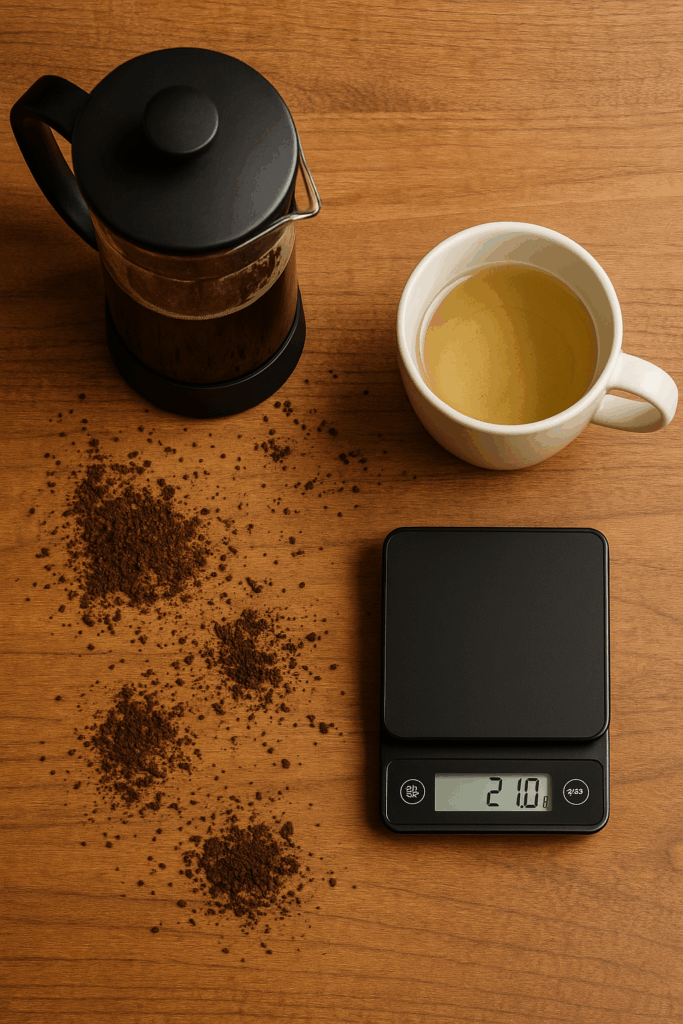
Get full-bodied brews — not weak, flavourless disappointment
You followed the recipe, used decent beans, and still ended up with a weak, flat cup of coffee. Sound familiar? Watery coffee is one of the most frustrating problems for home brewers — and one of the easiest to fix. Whether you’re using a French press, pour-over, or Moka pot, your brew should be bold, aromatic, and satisfying — not thin or bland. In this guide, we’ll cover the 7 most common reasons your coffee tastes watery and exactly how to fix each one.
1. You’re Using the Wrong Grind Size
Grind size affects how quickly water extracts flavour from the coffee. If your grind is too coarse, the water flows through too fast — barely extracting anything, leaving you with a weak cup.
Fix: Use a finer grind for pour-over or Moka pot. If you’re using a French press, make sure it’s coarse but not chunky.
🔗 Related: Understanding Coffee Grind Sizes
2. You Didn’t Use Enough Coffee
This is the most common mistake. If you’re eyeballing your grounds or using a random scoop, you’re probably under-dosing.
Fix: Weigh your coffee. A good starting point is 1:15 to 1:16 ratio (e.g. 20g coffee → 300g water).
🔗 Related: What Is the Right Coffee-to-Water Ratio?
3. Your Water Flowed Too Quickly (Pour Over Only)
If your pour-over finishes in under 2 minutes, your grind is likely too coarse, or your pouring technique is rushing extraction.
Fix: Slow your pour, use a finer grind, and stir the bloom gently to ensure saturation.
4. Your Brew Time Was Too Short
Brewing too quickly can under-extract your coffee, especially with French press or cold brew.
Fix: Stick to method-specific brew times:
- French press: 4 mins
- Pour-over: 2.5–3 mins
- Cold brew: 12–16 hours
- Aeropress: 1.5–2 mins (or follow your recipe closely)
5. Your Water Temperature Was Too Low
Brewing below 90°C means water doesn’t extract flavour effectively.
Fix: Use water between 90°C–96°C. If you don’t have a thermometer, boil your kettle, then let it rest 30 seconds before pouring.
6. Your Coffee Is Too Fresh (Yes, Really)
Extremely fresh beans (within 3–5 days of roast) can release too much CO₂ during brewing, disrupting extraction.
Fix: Let fresh beans rest 7–10 days before brewing for best results. Store in an airtight container away from light and heat.
7. Poor Saturation / Channeling
If some of your coffee grounds stay dry during brewing (especially in pour-over or AeroPress), you’ll get uneven extraction — and a watery result.
Fix: Pour slowly in spirals, stir after blooming, and avoid pouring straight down the middle only.

Quick Troubleshooting Table
| Problem | Likely Cause | Fix |
|---|---|---|
| Watery taste | Too coarse grind | Use finer grind |
| Weak flavour | Under-dosed coffee | Weigh coffee properly |
| Quick pour-over | Fast water flow | Slow pour and stir bloom |
| Cold brew too light | Too short steep or wrong ratio | Steep longer, 1:8 ratio |
| French press thin | Plunged early or water too cool | Steep full 4 mins, use hot water |
Bonus Tips for Fuller, Bolder Coffee
- Use filtered or bottled water: Minerals impact extraction
- Clean your gear: Old oils and residue can cause off flavours
- Grind fresh: Beans lose flavour fast after grinding
- Use a burr grinder: Consistent grind = consistent flavour
🔗 Related: Best Manual Coffee Grinders in the UK
Related Posts to Explore
- Why Does My Coffee Taste Bitter?
- French Press Brewing: The Perfect Ratio
- Best Coffee Scales for Brewing
Final Thoughts
Watery coffee doesn’t mean bad coffee — it just means something went off in your brew. Fixing it is usually a matter of adjusting grind, ratio, or timing. Once you dial those in, you’ll be able to enjoy coffee that’s rich, satisfying, and full of flavour — every single day.
💌 Want more quick fixes and brewing tips? Subscribe to The Daily Bean