
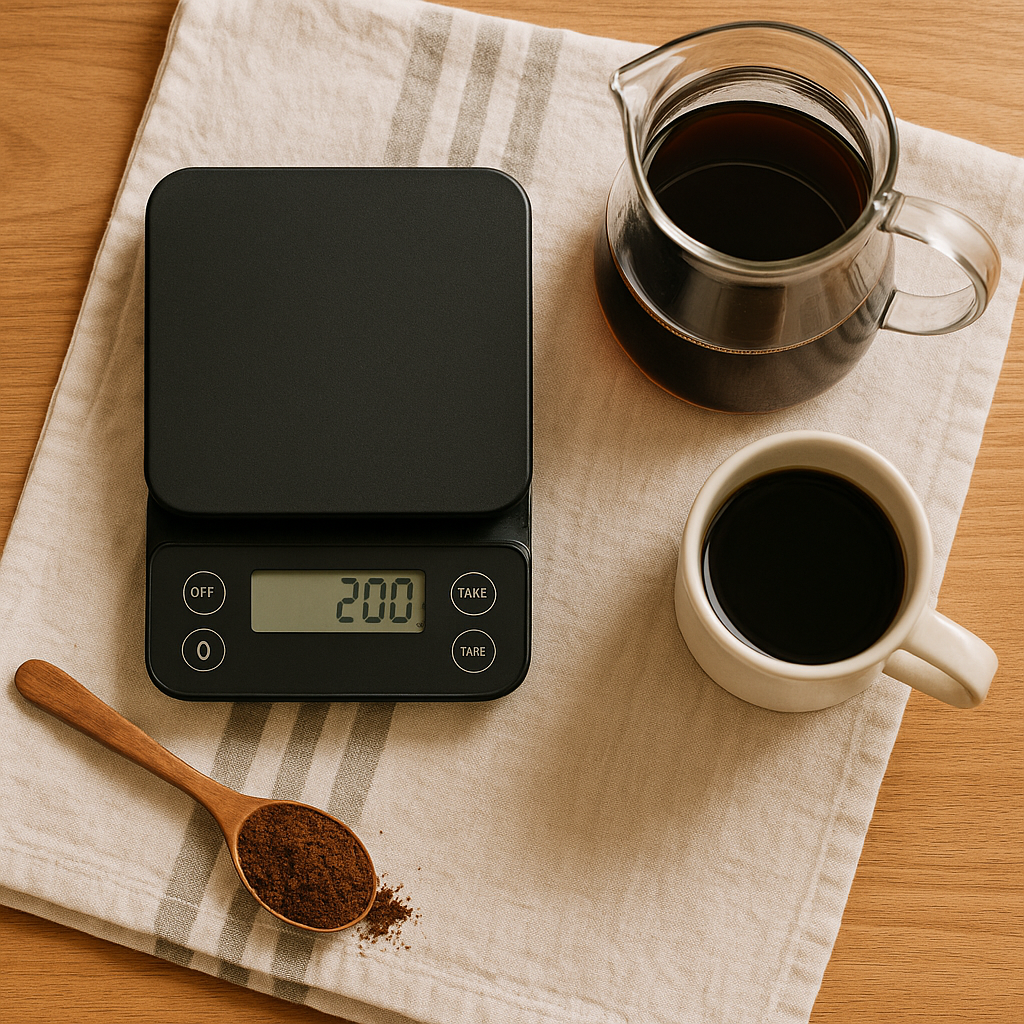
Get the perfect strength, every time
Ever made coffee that tasted too weak, or so strong it made your eyes water? The problem probably wasn’t your beans or your method — it was the ratio. Your coffee-to-water ratio is the foundation of every brew. Nail it, and everything else (grind, time, temp) has a chance to shine. In this guide, we’ll break down the best ratios for all major brew methods, help you adjust based on taste, and give you easy, repeatable formulas.
Why Ratios Matter
Coffee is made of two ingredients: coffee and water. How much of each you use determines strength, flavour balance, and how repeatable your brew is. If you’re scooping instead of weighing, you’re introducing daily guesswork. That’s fine if you like surprises — but if you want café-quality coffee at home, you need consistency. The right ratio ensures:
- The coffee doesn’t taste weak or sour (under-extracted)
- You don’t overdo it and get bitterness or dry mouth
- You can recreate great results every time
Golden Ratio: 1:16 (Start Here)
The standard starting point for most brew methods is 1 part coffee to 16 parts water.
Example: 20g coffee → 320g water
This makes a medium-strength brew. It’s ideal for pour-over, Moka pot, drip machines, French press, and even cold brew concentrate when doubled (1:8).
Recommended Ratios by Brew Method
| Brew Method | Ratio | Notes |
|---|---|---|
| French Press | 1:15 | Full-bodied, balances clarity and body |
| Pour Over (V60/Chemex) | 1:16 | Clean flavour and aroma |
| Moka Pot | 1:7–1:9 | Stronger brew for espresso-like profile |
| Cold Brew | 1:8 (concentrate), dilute 1:1 to serve | |
| Aeropress | 1:15 (long brew), 1:12 (short brew) | |
| Espresso | 1:2 | Very concentrated, not brewed with same method |
🔗 Related: French Press Brewing: The Perfect Ratio and Timing
🔗 Related: Cold Brew at Home: No Kit? No Problem
Don’t Have a Scale? Use This Cheat Sheet
While scales are best, here’s a rough guide using tablespoons:
- 1 tablespoon of ground coffee ≈ 6g
- For one mug (250ml), use ~2.5 tablespoons (~15g)
- For a stronger mug, go for 3 tablespoons
But remember: coffee varies by grind and roast, so these are only estimates. If your brews are inconsistent, a digital scale is one of the best £10–£30 upgrades you can make.
How to Adjust Your Ratio Based on Taste
If your coffee is too:
- Weak, sour, or watery: Add more coffee or reduce water (go 1:14)
- Bitter, dry, or too strong: Add more water or use less coffee (go 1:17)
- Just off? Double-check grind size — it works hand-in-hand with ratio
Top Tips for Better Brews
- Always use filtered water if your tap water tastes hard or metallic
- Use grams, not tablespoons, for consistency
- Stick with one method for a week and tweak only one variable at a time
- If switching beans, start at 1:16 again and adjust
Related Posts to Explore
Final Thoughts
Your coffee-to-water ratio is the foundation of every great cup. It’s not about perfection — it’s about repeatability. Start with 1:16, tweak to your taste, and stay consistent. Combine this with a reliable grind and you’re already ahead of most home brewers.
💌 For more guides and quick brewing tips, Subscribe to The Daily Bean